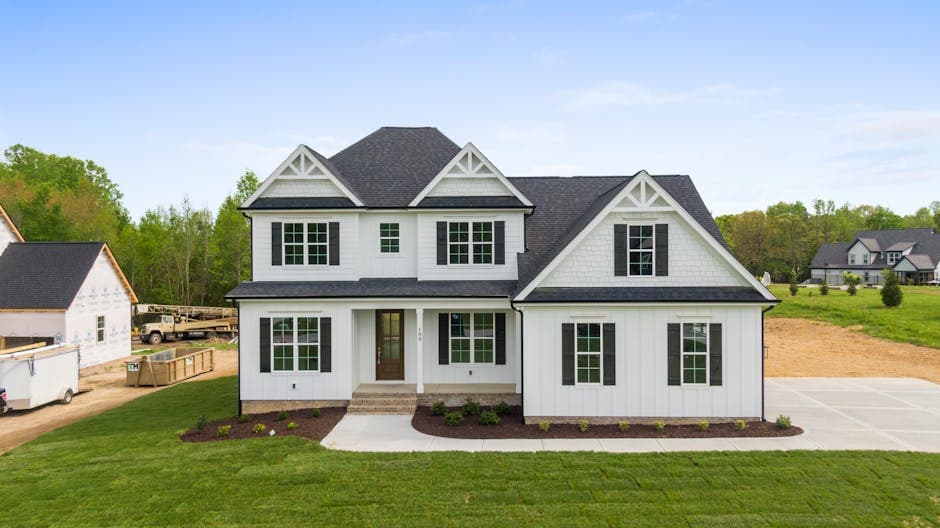
Your Austin Home Isn't Selling This Summer? Here's What to Fix
You listed your Austin home a few weeks ago, the showings started strong, and then things went quiet. No offers, fewer showings, and that little countdown of days on market keeps ticking up. If that is where you are right now, I want you to hear this first: it is almost never bad luck, and it is almost always fixable.
I help Austin sellers work through exactly this situation, in English or in Spanish, and I want to walk you through it the way I would if we were sitting at your kitchen table. No blame, no scare tactics. Just an honest read on why homes stall in this market and what actually gets them moving again.
Here is the important context. We are in the healthiest, most balanced Austin market in years. Inventory is up, buyers have time to think, and price reductions across the metro are common right now. That is not a crisis, but it does mean the market no longer forgives the mistakes it used to. In 2021 a slightly-too-high price got bailed out by a bidding war. In the summer of 2026 it just sits. So let's find the reason yours is sitting.
First, Rule Out the One Thing That Fixes Most Stalls
I am going to say the uncomfortable part right up front, because it is true nine times out of ten: if your home has been on the market for a few weeks with little interest, the price is almost certainly the issue.
I know that is not what any seller wants to hear, especially when you have watched neighbors get strong numbers over the last few years. But price is the one lever that can overcome almost every other problem. A dated kitchen, an awkward floor plan, a busy street, all of it sells at the right price. Nothing sells at the wrong one.
Here is the tell. If you got a flurry of showings in the first week or two and then it dried up, the market has already told you where your price sits. Buyers saw it, compared it to everything else they could get for the money, and quietly moved on. That silence is data. The good news is that price is also the fastest thing to fix.
The First Two Weeks Are Gone. Here's How to Think About What's Left
Every seller needs to understand this, because it changes how you should react. The first ten to fourteen days on the market are the most valuable window your home will ever get. That is when your listing is newest, shows up highest in buyer searches, and gets shown to the pool of people who have been waiting for something like yours to hit.
If those two weeks passed without an offer, that window is behind you, and chasing the market with tiny price drops is the trap I most want to keep you out of. Shaving a few thousand dollars every couple of weeks just follows the market down and signals to buyers that more cuts are coming, so they wait. One decisive, meaningful adjustment that puts you clearly ahead of your competition does far more than three timid ones.
So the mindset shift is this: stop thinking about what you have already lost in time, and start thinking about how to make the home feel brand new to the next wave of buyers.
Walk Your Own Listing Like a Buyer
Before we touch price again, let's make sure the home is actually being presented to win. Pull up your own listing on your phone tonight and look at it the way a buyer scrolling at 10pm would.
- The photos are your real first showing. Most buyers decide whether to visit based entirely on the pictures. If they are dark, shot on a phone, cluttered, or there are only eight of them, you are losing people before they ever reach the address. Professional photos are not a luxury in this market, they are the price of entry.
- The first photo has one job. It has to make someone stop scrolling. If your lead image is a gloomy front elevation on an overcast day, swap it for the brightest, most appealing shot you have.
- Read your own description. Is it a dry list of facts, or does it actually tell someone why this home is a good place to live? Buyers connect with the story, not the square footage alone.
- Count the friction. Hard-to-schedule showings, restrictive windows, or a home that is tough to see quietly kills momentum. In a market with real inventory, the easiest home to tour often wins.
If the listing itself is underselling the house, fixing that can breathe life back in before you ever discuss price again.
The Prep That Actually Moves the Needle
You do not need to renovate. In a balanced market, over-improving right before a sale rarely returns what you put in. What you want is the short list of high-ROI moves that make a home feel cared for and move-in ready.
- Declutter and depersonalize. This is free, and it is the single biggest visual upgrade most homes can make. Buyers need to picture their life in the space, not tour yours.
- Deep clean everything. A spotless home reads as a well-maintained home. A dirty one makes buyers wonder what else was neglected.
- Handle the obvious small stuff. The dripping faucet, the scuffed baseboards, the burnt-out bulbs, the sticky door. Individually minor, together they whisper "deferred maintenance" to a careful buyer.
- Boost the curb appeal. Fresh mulch, trimmed hedges, a clean entry. It costs little and sets the tone before anyone walks in, especially in the Texas summer when green and tidy stands out.
None of this is glamorous. All of it works.
Use the Tools a Balanced Market Hands Sellers
Here is something a lot of sellers miss: in this market you have levers beyond just cutting your list price, and some of them are more effective.
Buyers right now are wrestling with monthly payments and mortgage rates more than sticker price. That gives you options. Offering to contribute toward a buyer's closing costs or, better yet, toward a rate buy-down can lower their monthly payment more than an equivalent price cut would, and it often gets a hesitant buyer off the fence faster. A buy-down speaks directly to the affordability math that is actually holding people back.
The same goes for being ready to negotiate inspection items and small repair credits rather than treating every request as an insult. In 2026 buyers expect a real inspection and a reasonable back-and-forth. The sellers who work with that, instead of fighting it, are the ones who get to closing.
When It Is Genuinely Not the Price
Occasionally a home really is priced right and still sits, and it is worth naming the honest exceptions. Sometimes it is a true condition problem a buyer cannot see past, like a foundation issue or a roof at the end of its life. Sometimes it is a location factor, a backyard on a loud road or a tough school boundary, that a certain price simply has to account for. And sometimes it is timing, a specific pocket of the metro that is moving slower than the headline numbers suggest.
The point is not to guess. The point is to get a clear-eyed read on which of these, if any, actually applies to your home, so you are solving the real problem instead of throwing price cuts at the wrong one.
Let's Figure Out Your Specific Situation
Every stalled listing has a reason, and once you find it, the fix is usually more straightforward than it feels right now. The worst thing you can do is keep waiting and hoping while the days on market climb, because a listing that looks stale is the hardest kind to sell.
If your Austin home is not moving, I am glad to take an honest look and tell you what I actually see, whether that is the price, the photos, the prep, or something specific to your block. I will pull real, neighborhood-level comps for your exact area so we are working from what is truly happening on your street, not a metro-wide average. Request a home evaluation or reach out anytime, in English or Spanish, and we will put together a plan to get your home sold. No pressure, just a straight answer.
Related reading: